
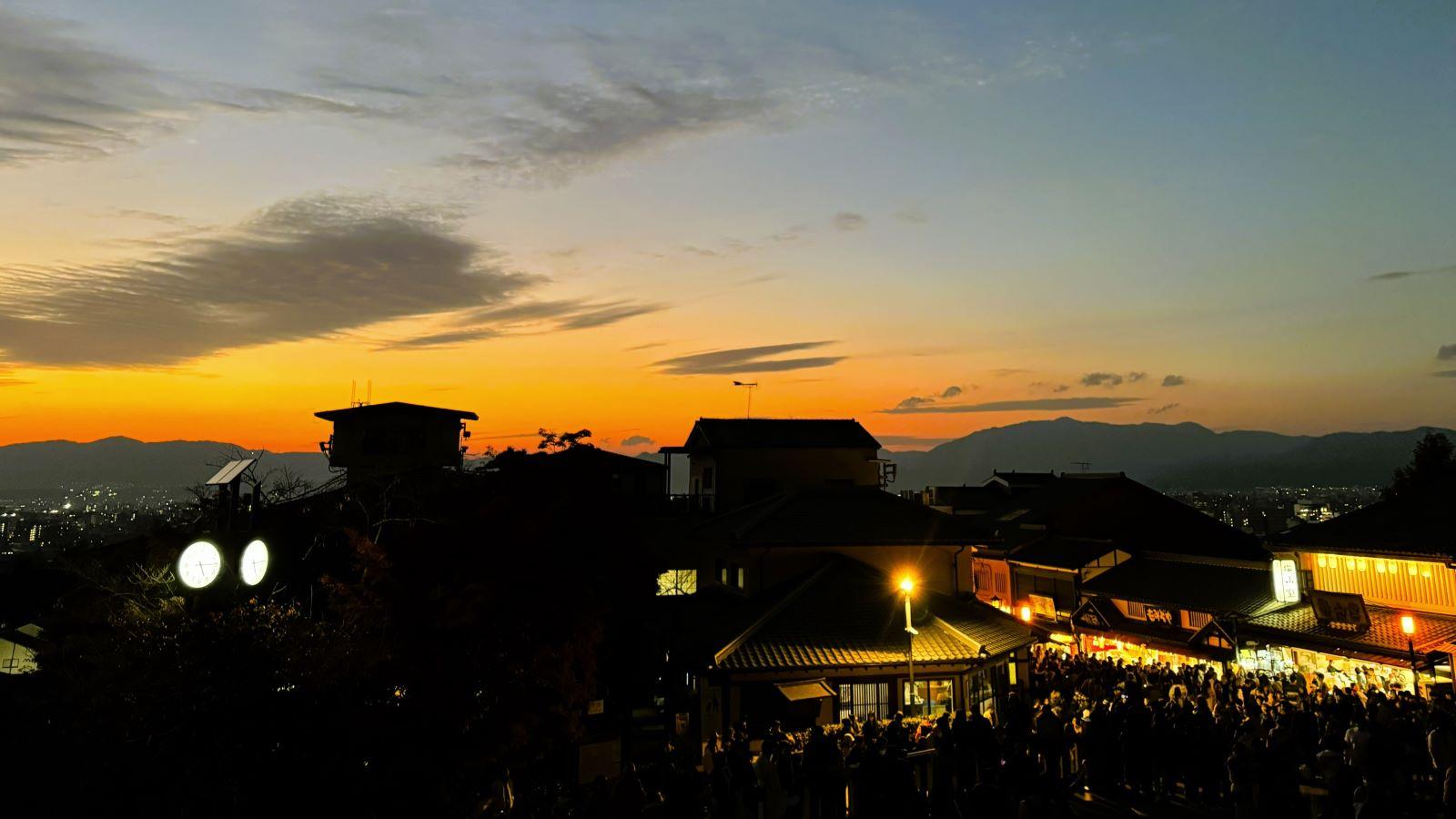
Why Night Entry at Kiyomizu-dera Offers a Unique Experience
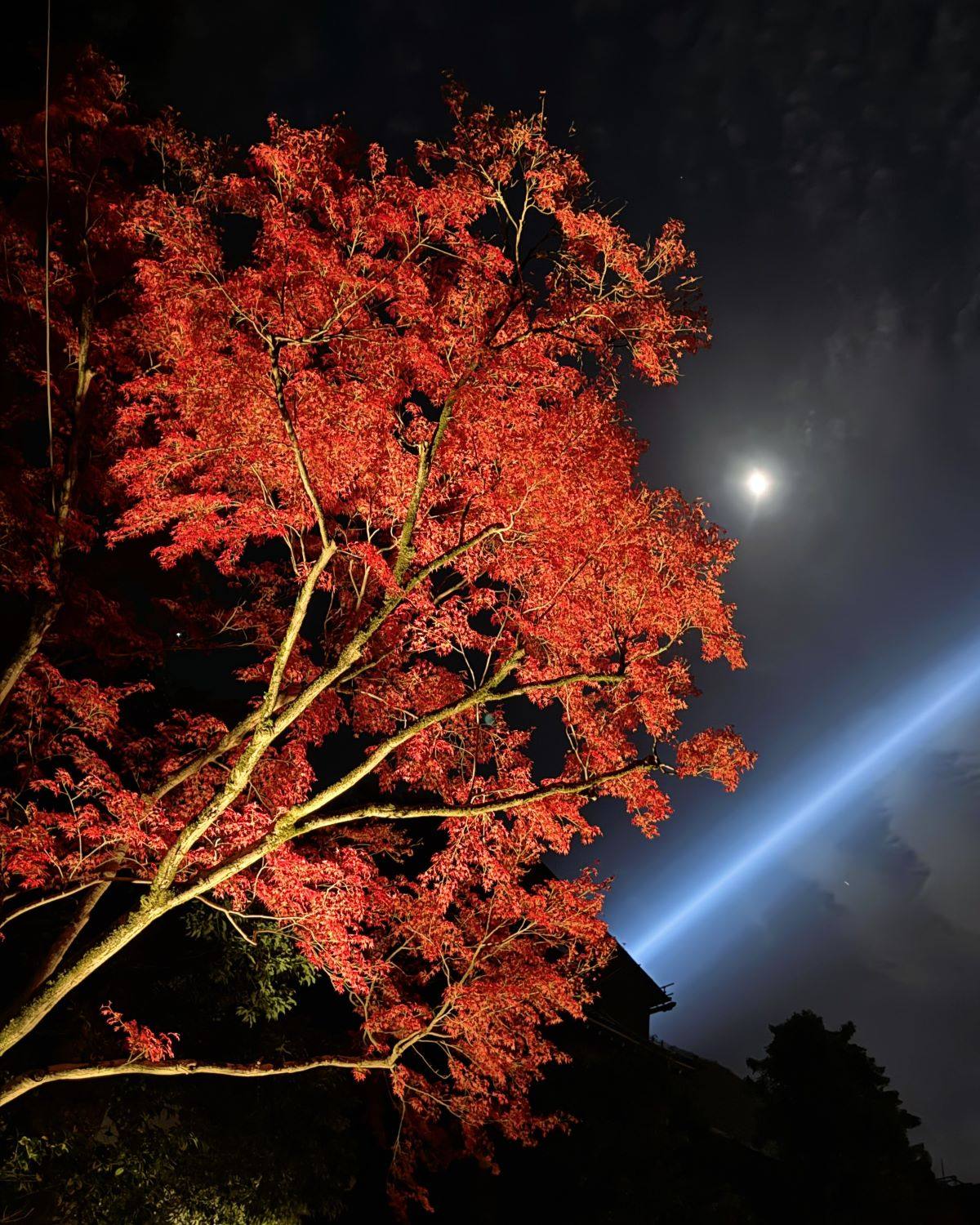
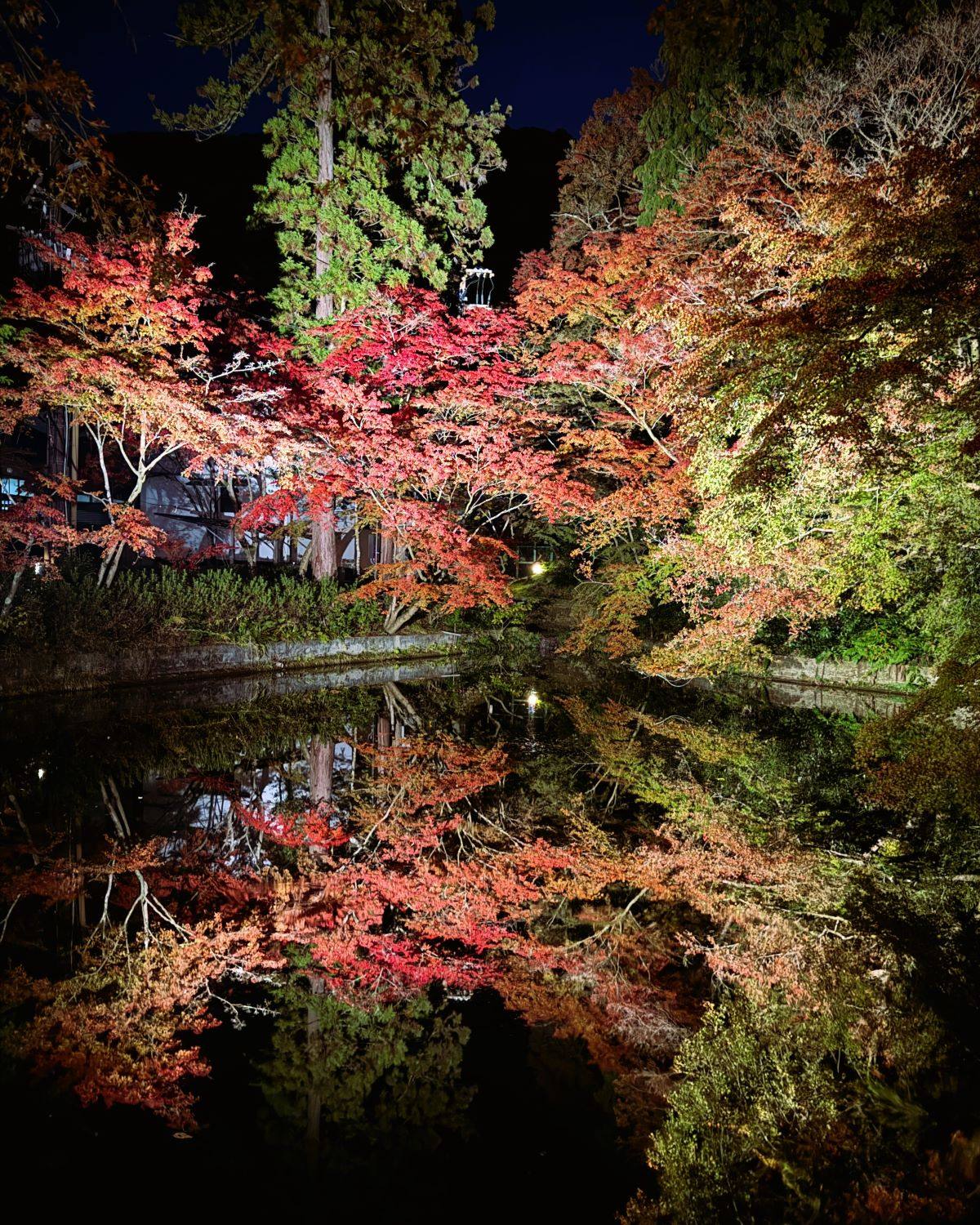
Visiting Kiyomizu-dera during the autumn special night viewing transforms the temple grounds into a strikingly dramatic scene. When I visited for the first time on November 23, 2023, the artificial lighting highlighted how closely the vibrant red maple foliage matches the warm wooden tones of the main temple structure.
While daytime visits reveal vast valley views across Mount Otowa, the night opening shifts the entire atmosphere toward a glowing cultural spectacle. For travelers who have never experienced night foliage in Kyoto, the vibrant contrast between illuminated trees and dark hill silhouettes makes the visit genuinely worth undertaking once.
- Experience dramatic evening lighting that highlights the natural harmony between autumn maples and centuries-old timber framing.
- Enjoy a distinct visual atmosphere that feels completely different from standard daytime sightseeing across Eastern Kyoto.
- Plan around high visitor density to ensure the visual payoff outweighs the physical crowding along key footpaths.
Night Illumination Schedule, Dates, and Official Tickets
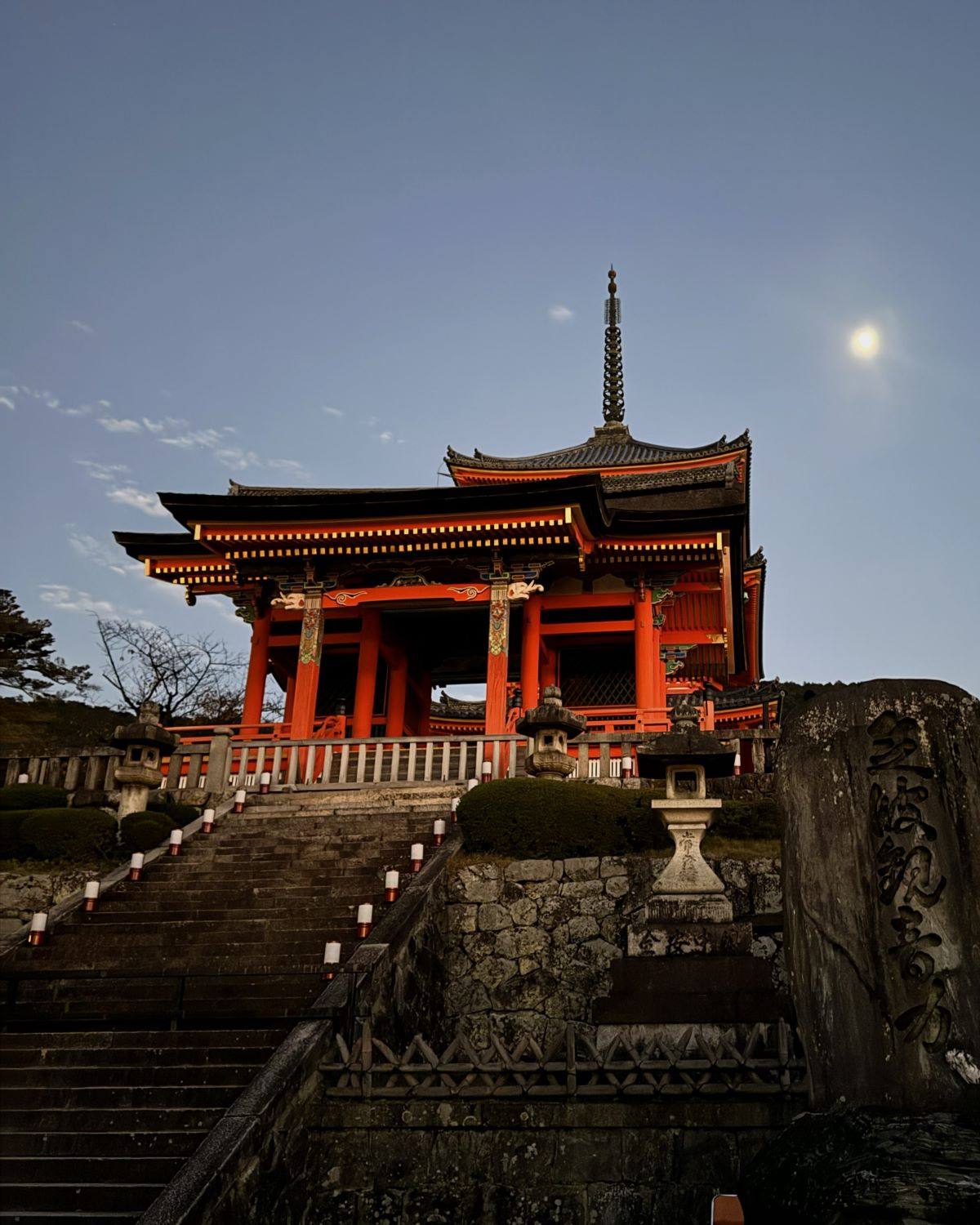
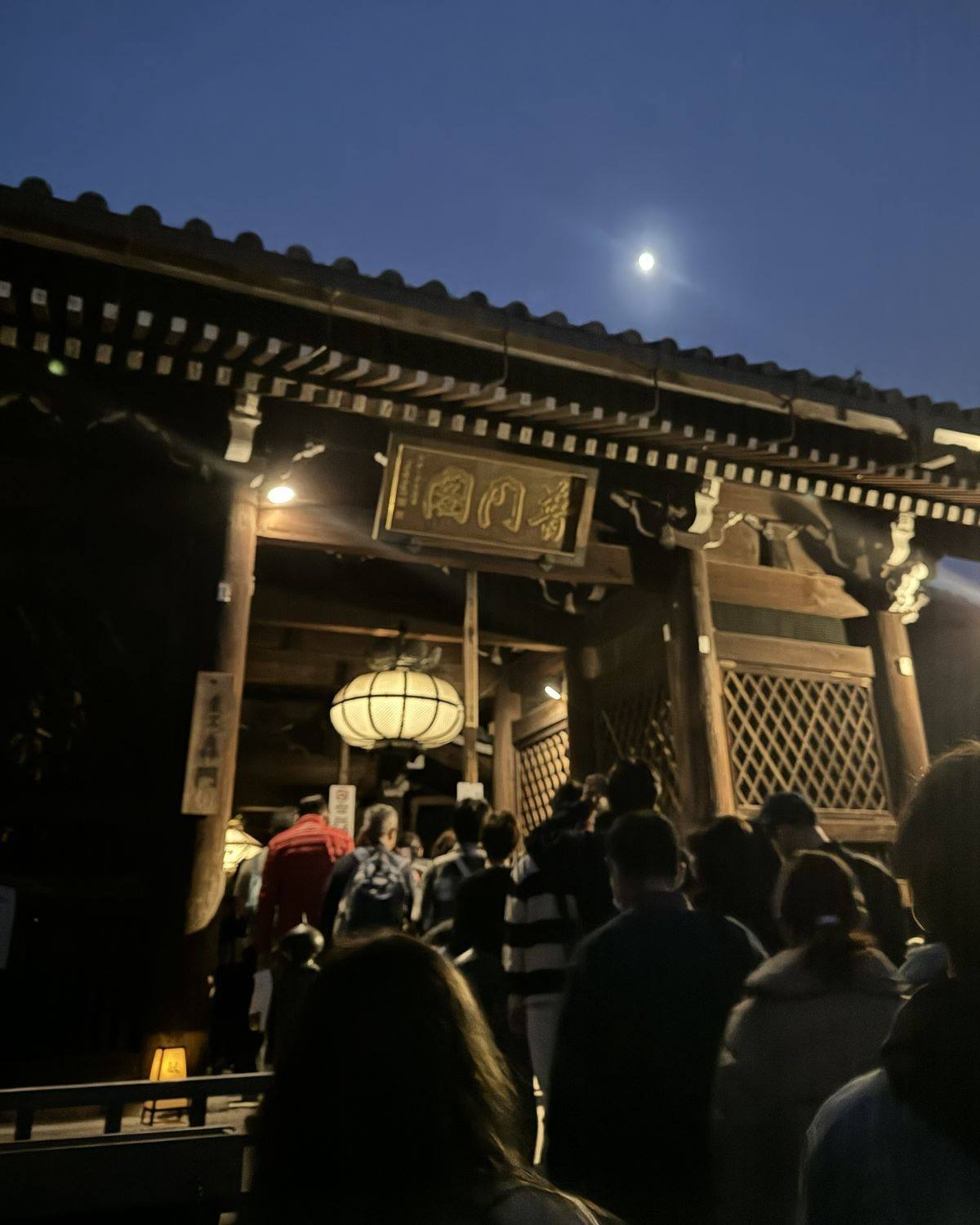
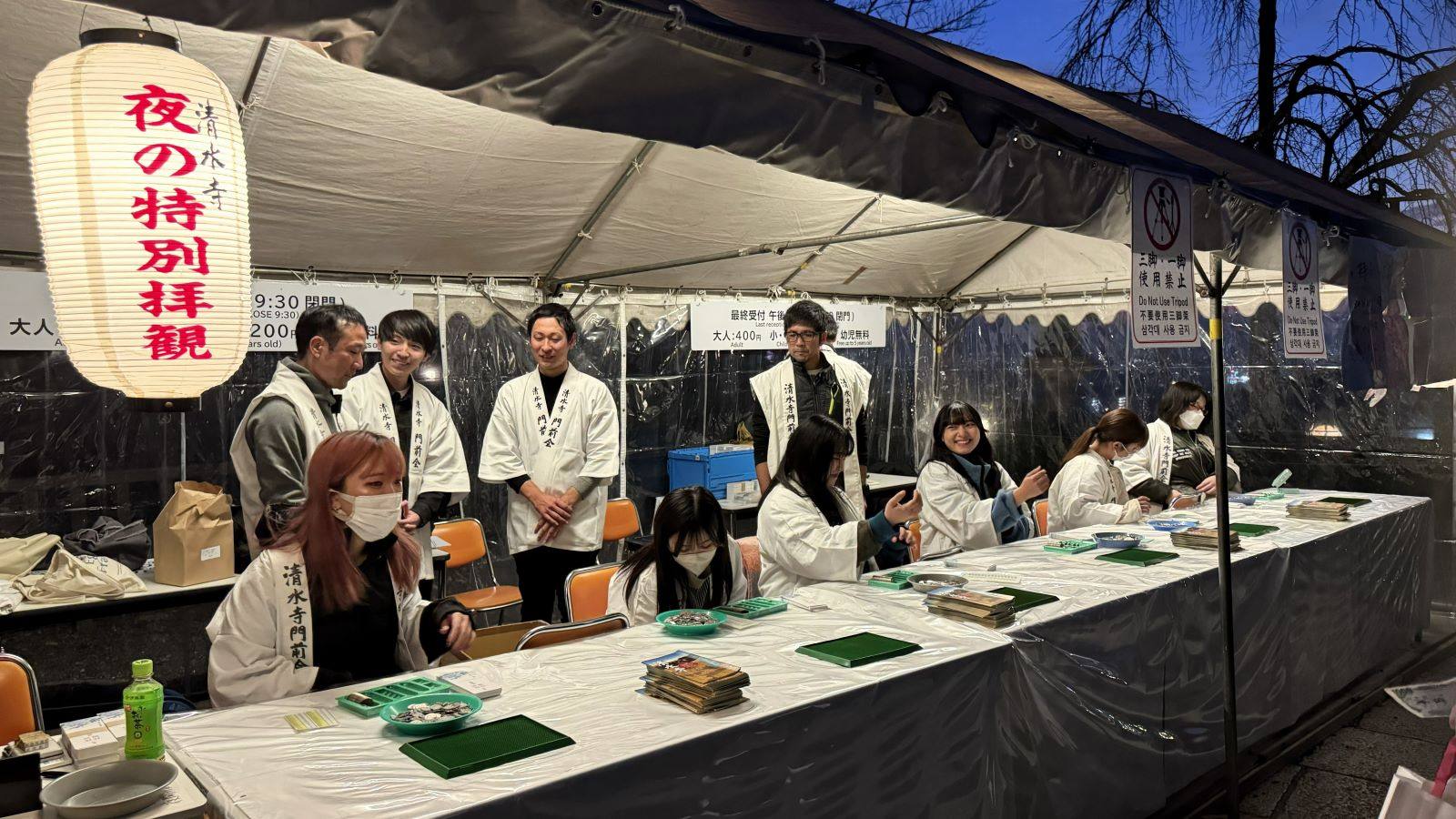
The 2023 autumn night illumination runs from November 18 to 30. Kiyomizu-dera remains open until 9:30 PM during the event, with last entry at 9:00 PM. Exact annual dates vary, making official site verification essential before your visit.,You do not need to book advance tickets online. Adult admission costs ¥400 and is purchased directly on-site at the ticket counter located to the right after passing the Nio-mon gate. Note that daytime tickets do not cover night entry, requiring a separate evening ticket.
- Verify exact annual dates on the official Kiyomizu-dera website, as the night opening window changes each season.
- Purchase tickets directly on-site at the Nio-mon entrance counter; advance online reservations are not required or offered.
- Budget separate admission fees if visiting both daytime and nighttime sessions, as daytime tickets expire when gates close.
Queue Logistics, Gate Timing, and Crowd Strategy
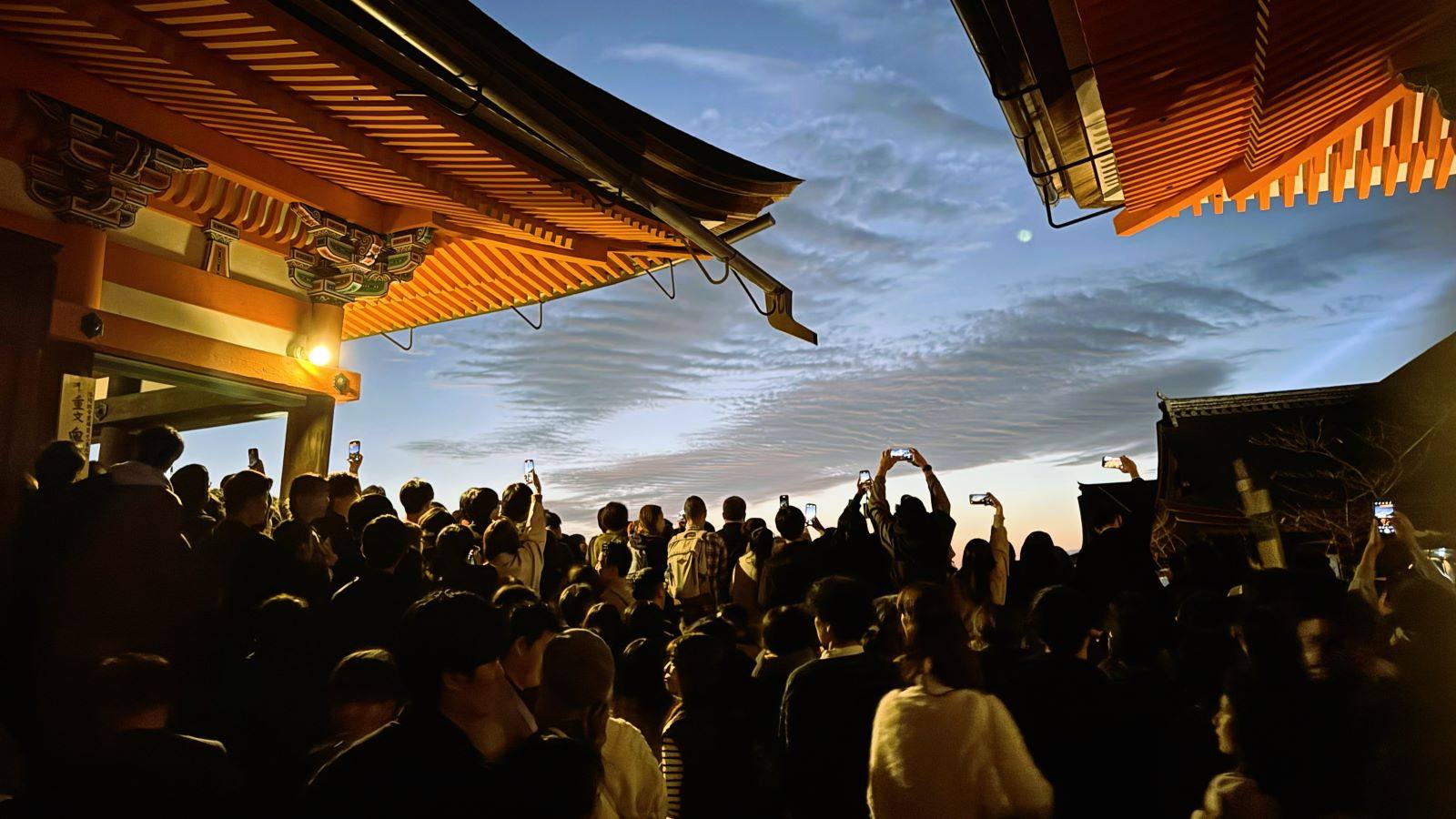
Crowds assemble early along the steep slopes leading to the main gate. When I arrived at 5:10 PM, substantial queues had already formed before ticket sales started at 5:30 PM. Arriving by 5:00 PM positions you well within the opening entry wave.,Inside, visitor traffic moves slowly toward the Main Hall and wooden stage. The elevated boardwalks become packed. To photograph the stage framed by maple foliage, you must patiently step into openings as people move out, taking roughly 30 minutes to reach the edge railings.
- Arrive at Nio-mon gate by 5:00 PM to line up prior to the 5:30 PM ticket window opening.
- Prepare for slow foot traffic along narrow wooden walkways leading up toward the Main Hall.
- Exercise patience at popular photo vantage points where reaching the railing edge requires stepping into moving gaps.
Viewing Highlights: Main Stage, Foliage, and the Blue Light
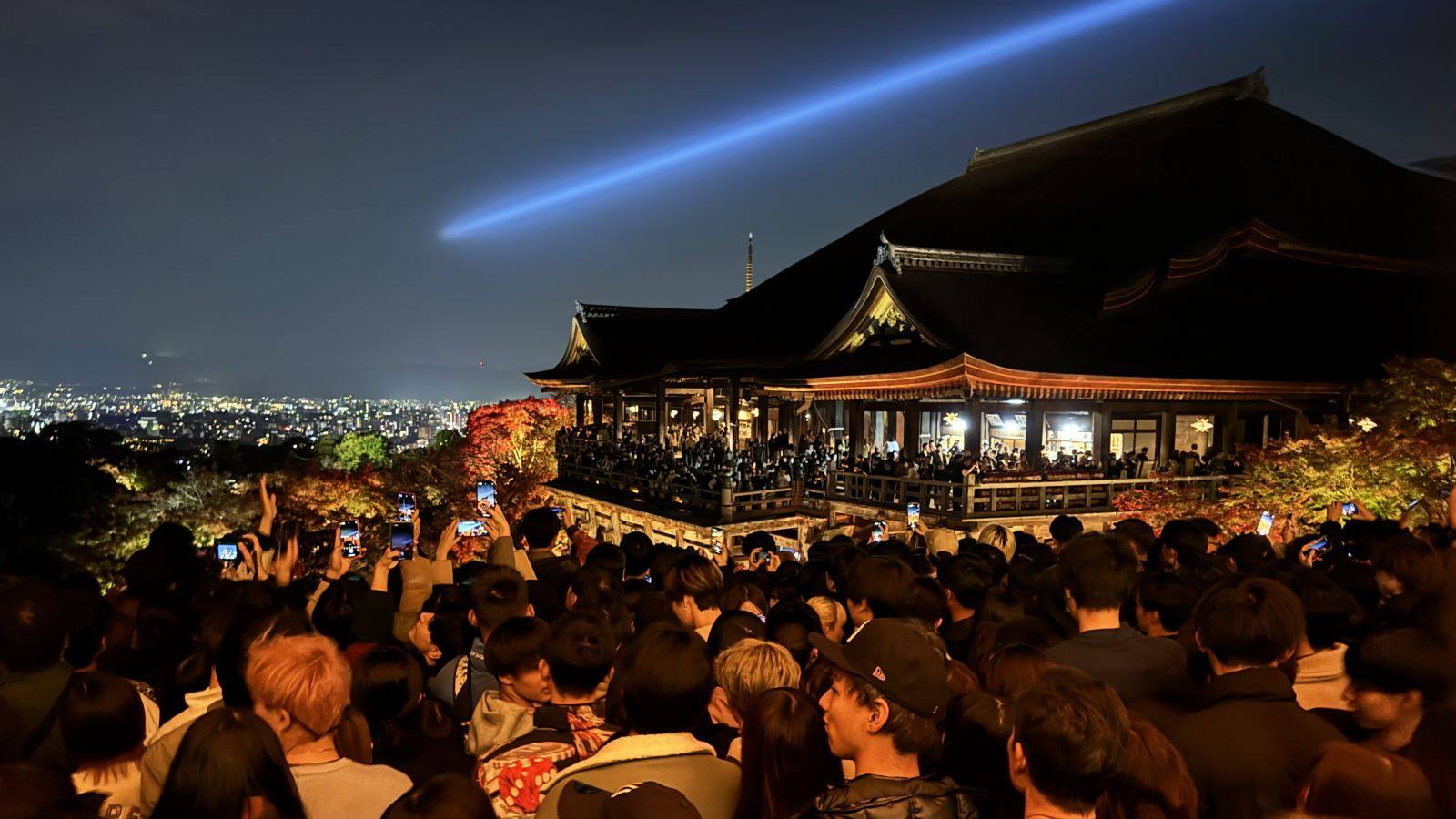
The core highlight is viewing the massive wooden stage protruding over Mount Otowa's wooded hillside, surrounded by illuminated maple trees. Rebuilt in 1633, the main structure is built entirely without nails, creating an imposing architectural backdrop against the vibrant red autumn foliage.
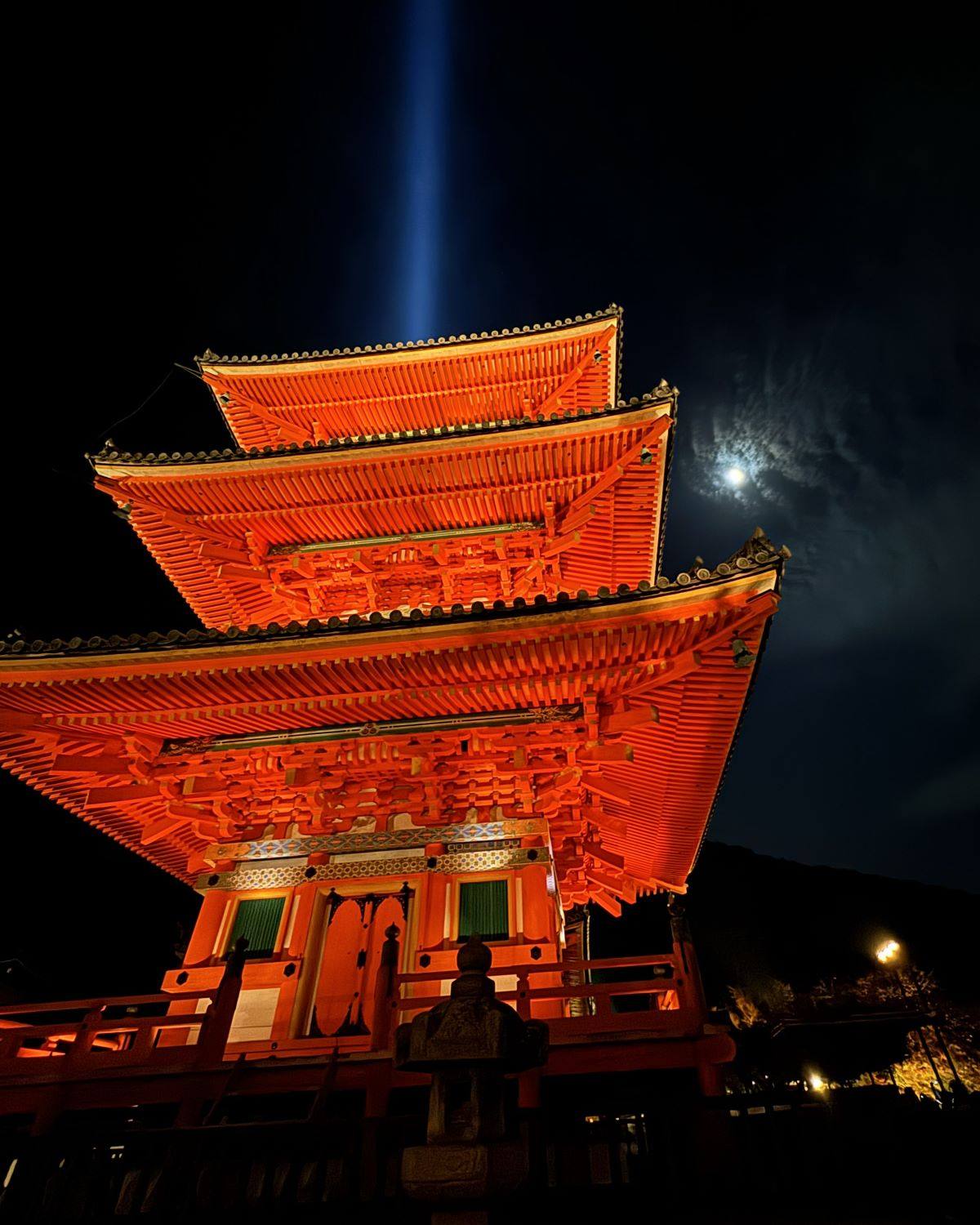
During the night viewing, a prominent blue beam of light pierces the sky above Kyoto. Seeing it initially felt almost like a sci-fi movie effect, but as explained on the temple’s official website, this beam symbolically represents the merciful light of Kannon Bodhisattva, adding spiritual meaning to the visual experience.
- Look for the intense blue light beam shining over Kyoto, which officially symbolizes the merciful light of Kannon.
- Admire the 1633 timber architecture of the Main Hall and stage, beautifully illuminated alongside surrounding red maples.
- Walk carefully along designated temple pathways, keeping moving group momentum in mind on dimly lit stairs.
Night vs. Day Viewing: Weighing Worth, Value, and Alternatives
Night entry offers exceptional visual drama that daytime visits cannot match, making it well worth doing at least once. However, daytime visits provide broader views across Kyoto city and easier physical movement. If dense crowds overwhelm you, daytime morning hours offer a calmer atmosphere.
For travelers seeking illuminated autumn foliage with fewer bottlenecks, nearby Kodai-ji Temple or Eikan-do Temple offer excellent night viewing alternatives in Kyoto. However, neither matches the sheer architectural scale and iconic stage perspective found at Kiyomizu-dera.
- Choose night viewing if dramatic lighting effects and unique seasonal ambiance take priority over uncrowded personal space.
- Consider Kodai-ji or Eikan-do as alternative night illumination spots if you prefer shorter wait times and wider pathways.
- Visit early in the morning during daytime hours if capturing clear landscape photos without heavy crowd pressure is essential.
Transit Route and What to Do Differently Next Time
From Kyoto Station, take Kyoto City Bus 206 to Gojo-zaka, followed by a 10-minute uphill walk. On weekends and holidays, sightseeing buses EX100 and EX101 also run between Kyoto Station and Gojo-zaka. Alternatively, walk 25 minutes from Keihan Kiyomizu-Gojo Station. Buses fill quickly near sunset, so allow extra transport buffer time.
On a future night visit, I would arrive even earlier—around 4:45 PM—to stand near the front of the queue, or enter later near 7:30 PM after the initial opening crowd disperses. I would also pack warmer clothing, as mountain air cools significantly while standing in queue.
- Ride City Bus 206 to Gojo-zaka stop, allocating at least 20 extra minutes for evening bus delays.
- Walk 25 minutes from Keihan Kiyomizu-Gojo Station as a reliable traffic-free alternative during peak autumn rush.
- Target an arrival time around 4:45 PM or after 7:30 PM to avoid the heaviest initial gate queue.
A good fit
First-time Kyoto travelers who want to experience dramatic night lighting over vibrant autumn maple foliage.
Photographers willing to patiently maneuver through dense crowds to capture the illuminated stage and valley views.
Sightseers seeking a culturally atmospheric evening activity after daytime temple and garden visits across Higashiyama.
Think twice
You dislike tight crowds or cannot stand in line for 30 minutes to view the main stage.
You expect a quiet, contemplative temple atmosphere; nighttime viewing is extremely busy and tightly packed.
You have difficulty walking up steep slopes like Gojo-zaka or navigating dense, moving crowds on elevated walkways.